How I Shielded My Savings from Medical Shocks with Smarter Spreading
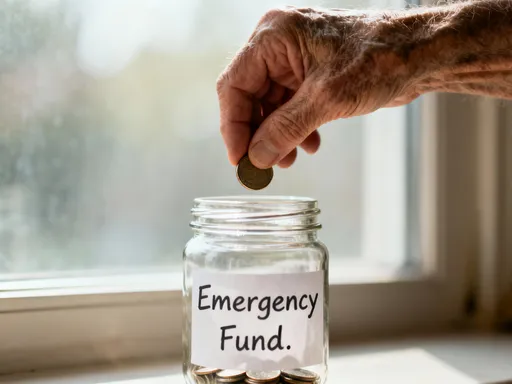
Medical emergencies don’t just hurt—they hit your wallet hard. I learned this the hard way when an unexpected hospital bill drained half my emergency fund. That moment changed how I see money. Instead of keeping everything in one place, I started spreading my assets across different types of accounts and investments. It wasn’t about chasing big returns—it was about survival. This is how smart diversification became my financial safety net when health issues struck. What I discovered wasn’t a secret Wall Street strategy, but a practical, grounded approach that anyone can adopt. The goal wasn’t to get rich quickly, but to stay afloat when life turned turbulent. In the months that followed, I studied how families weather medical costs without losing their homes or retirement dreams. The pattern was clear: those who fared best weren’t the ones with the most money, but the ones with the most thoughtful plans.
The Wake-Up Call: When Health Crises Meet Unprepared Finances
It started with a routine check-up that wasn’t so routine. A persistent pain led to scans, then a diagnosis, then a hospital stay that lasted nearly two weeks. By the time the bills arrived, the total exceeded $42,000—even after insurance covered what it could. My emergency fund, which I believed was solid at $50,000, was suddenly less than half full. I wasn’t alone. According to a 2023 Kaiser Family Foundation report, nearly one in four American adults have medical debt, and many underestimate how quickly costs can spiral. What shocked me most wasn’t the illness itself, but how quickly my financial confidence unraveled. I had done the “right” things—built a savings cushion, paid my premiums, avoided credit card debt—yet I was still vulnerable. The truth is, traditional financial advice often stops short. It tells you to save, but not how to protect those savings when they’re needed most. Relying solely on a high-deductible health plan or a standard savings account creates a false sense of security. These tools are important, but they’re not enough on their own. When a medical crisis hits, you need more than just cash—you need structure, flexibility, and foresight. Without it, even a well-funded account can vanish in weeks. This experience forced me to rethink not just how much I saved, but where I kept it and how it worked for me. I realized that financial resilience isn’t about having a large balance—it’s about having the right kind of balance in the right places at the right time.
Why “All Eggs in One Basket” Fails in Medical Emergencies
For years, I kept nearly all my savings in a single high-yield savings account. It felt safe, accessible, and straightforward. I told myself I was being cautious. But caution without strategy can be its own risk. The problem wasn’t the account itself—it was the lack of variety in my financial setup. When medical expenses began arriving in waves, I had no choice but to draw from that one source. There was no backup, no alternative stream. And while the account earned interest, it wasn’t keeping pace with inflation. Over five years, the real purchasing power of my savings had quietly eroded by nearly 12%, according to U.S. Bureau of Labor Statistics data. That meant every dollar withdrawn was worth less than it once was. What I didn’t realize was that liquidity—the ability to access money quickly—was only one part of the equation. The other was growth. Without some exposure to assets that can grow over time, savings stagnate. And when a major health event occurs, stagnant savings don’t stretch far. Consider this: a $30,000 medical bill paid entirely from a savings account leaves you with $30,000 less. But if part of that fund had been in diversified, income-generating assets, the impact could have been softened. For example, dividend-paying stocks or bond funds might have provided ongoing returns, reducing the amount needed to withdraw. The key insight is that medical emergencies don’t care about your financial habits—they only care about how much you can pay. If your entire safety net is in one place, you’re exposed to both market inertia and personal over-reliance. Spreading assets isn’t about gambling; it’s about reducing the pressure on any single source when crisis hits. It’s the difference between standing on one leg and standing on three. One might hold, but three are far more stable.
Asset Diversification Decoded: More Than Just “Don’t Put Everything in One Place”
Diversification is often misunderstood as a complex investing tactic for the wealthy. In reality, it’s a practical risk management tool anyone can use. At its core, diversification means allocating money across different types of assets so that no single loss can wipe you out. It’s not about predicting the market—it’s about preparing for uncertainty. Think of it like a toolbox: you wouldn’t build a house with only a hammer. Similarly, you shouldn’t manage your finances with only one type of account. Savings accounts are great for immediate access, but they offer limited growth. Bonds provide steady income and are generally less volatile than stocks. Exchange-traded funds (ETFs) allow you to own a mix of assets—like hundreds of companies—in a single purchase, spreading risk efficiently. Real estate investment trusts (REITs) offer exposure to property markets without requiring you to buy a physical home. None of these are risk-free, but together, they create a more balanced financial posture. The goal isn’t to maximize returns in any single year, but to avoid catastrophic losses when life interferes. For example, if one investment dips during a market correction, others may hold steady or even rise, cushioning the blow. This balance becomes especially important during health crises, when emotional stress can lead to rushed financial decisions. With a diversified structure, you’re less likely to panic-sell or raid retirement accounts at the worst possible time. Instead, you can draw from the most appropriate source based on need and timing. Diversification also helps protect against inflation, which quietly reduces the value of cash over time. By including assets with growth potential, you give your savings a chance to keep up with rising costs—especially important when medical bills are involved. The beauty of this approach is its simplicity: it doesn’t require constant monitoring or risky bets. It simply asks that you think ahead and spread your resources wisely.
Building Your Medical Financial Buffer: A Practical Layered Approach
After my medical scare, I developed a three-layer financial buffer to handle future health-related expenses. This model isn’t rigid, but it provides clear guidance on where to keep money based on when you might need it. The first layer is immediate-access cash—enough to cover three to six months of essential living expenses plus a medical reserve of $5,000 to $10,000. This stays in a high-yield savings account or money market fund, where it’s safe and available within days. The purpose is to handle sudden bills without selling investments at a loss. The second layer consists of stable, medium-growth assets like short-term bond funds, certificates of deposit (CDs), or conservative ETFs. These typically offer better returns than savings accounts while remaining relatively low-risk. I keep 30% to 40% of my non-retirement savings here, with the understanding that I can access it within three to twelve months if needed. Because these assets aren’t as volatile as stocks, I can withdraw without fear of significant loss. The third layer is long-term holdings—index funds, dividend stocks, or real estate funds—that I don’t plan to touch for at least five years. These are meant to grow quietly over time, compounding returns and building wealth. I contribute to this layer regularly, even during stable periods, because consistency matters more than timing. Each year, I review all three layers to ensure they still align with my health status, income, and family needs. If I get a raise, I increase contributions. If a family member develops a chronic condition, I adjust the emergency reserve. This layered method removes guesswork. When a bill arrives, I know exactly where to look first. I don’t raid retirement accounts or max out credit cards. Instead, I follow a plan that’s already in place. It’s like having a fire extinguisher, smoke detector, and evacuation route—all part of a single safety system. The result is peace of mind. I’m not trying to predict the future, but I’m no longer helpless when it arrives.
Common Traps to Avoid: Where Good Plans Go Wrong
Even with the best intentions, financial plans can fail when common pitfalls aren’t addressed. One of the most frequent mistakes is over-investing in illiquid assets—those that can’t be easily converted to cash. Real estate, certain retirement accounts, and private investments may grow well over time, but they’re not helpful during a sudden medical crisis. Selling a rental property takes months. Withdrawing from a traditional IRA before age 59½ triggers taxes and penalties. These delays can force people into high-interest loans or credit card debt, defeating the purpose of long-term planning. Another trap is chasing high returns too early. Some investors, eager to grow their savings faster, put too much into volatile stocks or speculative funds. While these can deliver strong gains in bull markets, they can also plunge in downturns—precisely when you need stability most. A 2022 Vanguard study found that investors who shifted to conservative portfolios during health crises lost significantly less than those who held aggressive allocations. Emotional decision-making is another major risk. Fear and stress can lead to panic selling at market lows, locking in losses that could have been avoided with patience. Conversely, overconfidence during good health can lead to under-saving or skipping insurance updates. Some people assume their current coverage is sufficient, only to discover gaps when a claim is denied. For example, many standard plans don’t cover certain therapies, out-of-network specialists, or extended rehabilitation. A plan that looks strong on paper can fall apart when tested. The key is to build flexibility into your strategy. Choose accounts with clear withdrawal rules, avoid products with hidden fees or long lock-up periods, and always confirm how quickly you can access funds. A financial plan isn’t just about what you own—it’s about how easily you can use it when it matters most.
Balancing Risk and Access: The Hidden Trade-Offs
Every financial decision involves trade-offs, and nowhere is this more true than in preparing for medical expenses. The central tension lies between growth and accessibility. Assets that grow quickly—like stocks—often come with higher volatility and longer time horizons. Those that are easy to access—like checking accounts—typically offer little to no growth. The challenge is finding the middle ground: investments that can appreciate over time but won’t trap your money when you need it. Tax implications add another layer of complexity. Withdrawals from traditional retirement accounts are taxed as income, and early withdrawals often carry a 10% penalty. Health Savings Accounts (HSAs), on the other hand, offer triple tax advantages: contributions are tax-deductible, growth is tax-free, and withdrawals for qualified medical expenses are also tax-free. This makes HSAs one of the most powerful tools for medical financial planning, yet many people underutilize them. In 2023, only 28% of HSA-eligible individuals contributed the maximum allowed, according to the Employee Benefit Research Institute. Another consideration is timing. Selling investments at the wrong moment can trigger capital gains taxes or miss out on recovery periods. A better approach is to structure your portfolio so that short-term needs are met by stable, liquid assets, while long-term growth comes from diversified holdings that aren’t touched during crises. This way, you avoid selling low and can let your investments recover naturally. Automatic withdrawal rules, such as those in CDs or certain mutual funds, can also limit access when you need it most. Always review the terms before committing. The goal is to create a system where money works for you in normal times and supports you in emergencies—without derailing your long-term goals. It’s not about having everything available at once, but about having the right amount available at the right time.
Making It Stick: Habits That Protect Your Health and Wealth
Knowledge alone isn’t enough—consistency turns planning into protection. The most effective financial resilience comes not from a one-time overhaul, but from daily and yearly habits that keep your strategy alive. One of the simplest yet most powerful tools is automatic transfers. Setting up recurring deposits from your paycheck into your emergency fund, HSA, or investment accounts ensures steady progress without requiring constant attention. Even $100 per month, invested in a diversified fund, can grow significantly over a decade thanks to compounding. Another essential habit is the annual financial review. Life changes—marriage, children, job shifts, health updates—and your plan should reflect those changes. Every year, I assess my insurance coverage, update my emergency fund target, and rebalance my investment mix if needed. This isn’t a full financial audit, but a focused check-up to ensure alignment with current realities. Mental framing also plays a crucial role. I refer to my medical reserve as my “healing fund,” not a spending account. This small shift in language reinforces its purpose and reduces the temptation to dip into it for non-essential purchases. I also involve my family in the conversation, not to cause worry, but to ensure everyone understands the plan. If a crisis occurs, there’s no confusion about where to turn. Finally, I accept that perfection isn’t the goal. There will be years when contributions are smaller, markets dip, or unexpected costs arise. What matters is that the system remains intact. Financial strength isn’t measured by flawless execution, but by the ability to adapt and recover. By building habits that prioritize preparation over panic, I’ve created a safety net that supports both my health and my peace of mind.
True financial strength isn’t measured by returns alone, but by how well you withstand life’s surprises. Medical costs are unpredictable, but your response doesn’t have to be reactive. By spreading assets wisely, staying informed, and avoiding common missteps, you build more than savings—you build confidence. That peace of mind? It’s the best return anyone can earn.