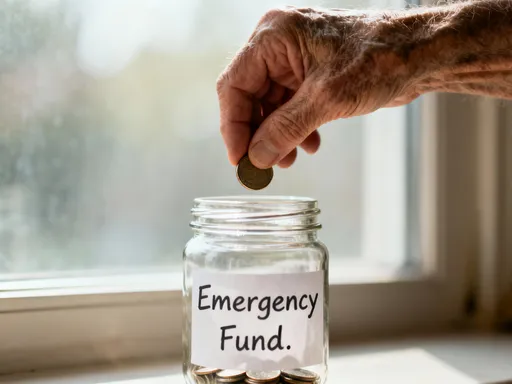
How I Smartened Up My Emergency Cash — A Real Talk on Making It Work Harder
We all know we should have emergency cash sitting around, but let’s be honest — watching it just collect dust in a basic account stings. I felt the same, until I realized my safety net didn’t have to mean zero growth. What if your emergency fund could actually do something without taking big risks? This isn’t about chasing sky-high returns. It’s about being smarter with what you already need to keep safe. Here’s how I reshaped my emergency savings — practically, safely, and with real results.
The Problem with “Safe” Money That Does Nothing
For years, the standard advice has been simple: stash three to six months’ worth of living expenses in a savings account and leave it alone. That guidance still holds value, but too often, it stops there — with no follow-up on whether that money is truly serving its owner. The truth is, when emergency cash sits in a traditional savings account earning less than 0.5% annual interest, it’s not just idle; it’s slowly losing value. Inflation, which averaged around 2-3% annually over the past decade in many developed economies, quietly chips away at purchasing power. That means $10,000 saved today might only buy what $9,200 or $9,300 can buy five years from now, even if the balance never drops.
This erosion isn’t dramatic overnight, which is why it’s so easily overlooked. But over time, the gap grows. Imagine diligently saving for years, only to discover that when an actual emergency hits — a car repair, a medical bill, a temporary job loss — your dollars don’t stretch as far as they once did. That’s the hidden cost of doing nothing with your emergency fund. It feels safe because the number on the screen hasn’t changed, but financially, you’ve taken a loss without even knowing it. The risk isn’t in losing principal; it’s in losing real-world value.
Many people believe that safety and growth are mutually exclusive, especially when it comes to emergency funds. They assume that any effort to earn more interest must involve stocks, mutual funds, or other volatile investments — and rightly avoid those for this purpose. But that mindset traps savers in a false choice: either accept near-zero returns or take unacceptable risks. In reality, there’s a middle ground — one where your money remains protected, accessible, and still earns enough to keep pace with inflation. Recognizing this gap was the first step in my own shift from passive saving to active protection of my financial cushion.
The key is understanding opportunity cost — what you give up by choosing one option over another. By keeping emergency cash in a low-yield account, you’re giving up the potential to earn more without sacrificing security. That missed interest could mean the difference between covering a surprise expense fully or having to dip into credit cards. Over time, those forgone earnings add up. For a $15,000 emergency fund, earning 0.1% versus 4.0% means leaving over $500 in interest on the table each year. That’s not life-changing money, but it’s also not nothing — especially when it comes from doing essentially the same thing, just with a smarter account choice.
Redefining Safety: Security Meets Smart Growth
Safety in personal finance has traditionally meant one thing: don’t lose your money. And for good reason. When it comes to emergency funds, preserving capital is non-negotiable. No one wants to face a crisis only to find their savings have dropped in value because they were invested in something too risky. But true financial safety goes beyond just protecting the dollar amount. It also means protecting what that money can actually buy. If your emergency fund isn’t keeping up with inflation, then even if the balance stays the same, you’re less secure than you think.
This broader definition of safety — one that includes both principal protection and purchasing power preservation — changes how we should think about where to keep emergency cash. Instead of asking only “Is this safe?” we should also ask “Is this working hard enough to stay safe in real terms?” That shift in perspective opens the door to better solutions. It allows us to explore options that offer modest returns without compromising on security or access. The goal isn’t to turn an emergency fund into a wealth-building engine; it’s to make sure it doesn’t quietly shrink in value while waiting for a rainy day.
Low-risk doesn’t have to mean no-gain. In fact, in recent years, a range of financial products have emerged — or become more widely available — that deliver higher yields while still meeting the core requirements of an emergency fund: safety, liquidity, and stability. These include high-yield savings accounts, money market funds, and short-term certificates of deposit. None of these involve stock market exposure or complex derivatives. They are backed by conservative investments like government securities, short-term bonds, or insured deposits. And yet, they can offer returns several times higher than traditional savings accounts.
What makes these options suitable is not just their performance, but their structure. They are designed to maintain stable values and allow quick access to funds. For example, many high-yield savings accounts are offered by online banks that pass on lower operating costs in the form of higher interest rates. These institutions are typically FDIC-insured (in the U.S.) up to $250,000 per depositor, per institution, meaning your money is protected even if the bank fails. That combination of insurance, accessibility, and better returns redefines what “safe” can mean. It proves that being cautious with your money doesn’t require settling for poor performance.
Where to Park Your Emergency Cash — Smarter Options Explored
Once you accept that your emergency fund can and should earn more, the next step is knowing where to put it. The good news is there are several reliable, accessible, and low-risk options that outperform traditional savings accounts. Each has its own strengths, and the best choice often depends on your personal needs, risk tolerance, and how quickly you might need the money. The most common and effective alternatives include high-yield savings accounts, money market funds, and short-term certificates of deposit.
High-yield savings accounts are perhaps the easiest upgrade from a standard savings account. Offered primarily by online banks, they typically offer interest rates between 3.5% and 5.0% annually, significantly higher than the national average for traditional brick-and-mortar banks. These accounts are FDIC-insured, meaning your deposits are protected up to legal limits. They also allow unlimited transfers to linked checking accounts, usually within one to two business days. For someone who wants simplicity and peace of mind, a high-yield savings account is often the best starting point. It requires no investment knowledge, carries no market risk, and can be opened in minutes online.
Money market funds are another strong option, particularly for those comfortable with a slightly different structure. These are mutual funds that invest in short-term, high-quality debt securities like U.S. Treasury bills and commercial paper. While not FDIC-insured, many money market funds aim to maintain a stable net asset value of $1.00 per share and are considered very low risk. Some brokerage firms offer money market funds with check-writing privileges and instant transfer options, making them highly liquid. Yields on these funds have been competitive, often ranging from 4.0% to 5.5%, depending on interest rate conditions. They are best suited for investors who already have a brokerage account and want a balance between yield and access.
Short-term certificates of deposit (CDs) offer a third alternative, especially for the portion of an emergency fund that might not be needed immediately. CDs are time deposits with fixed terms — typically three months to one year — and higher interest rates than regular savings accounts. Early withdrawal usually comes with a penalty, so they’re not ideal for money you might need at a moment’s notice. However, they are FDIC-insured and can be used strategically in a tiered approach. For example, you could divide your emergency fund into multiple CDs with staggered maturity dates, a strategy known as laddering. This way, part of your money is always becoming available without penalty, while the rest earns a higher rate.
Each of these tools has a role. A high-yield savings account can serve as your primary access point. A money market fund might hold a secondary reserve. And short-term CDs can be used for the longer-term portion of your cushion. The key is not to put all your money in one place, but to match each dollar to its likely use. This approach allows you to earn more without exposing your safety net to unnecessary risk.
Liquidity Rules: Why Access Still Comes First
No matter how attractive the return, an emergency fund must remain easy to access. That’s its entire purpose. If you can’t get to your money quickly when an unexpected expense arises, then even the highest-yielding account fails its primary job. Liquidity — the ability to convert savings into spendable cash without delay or penalty — is non-negotiable. This principle should guide every decision about where to park emergency funds.
When evaluating financial products, it’s essential to look beyond the interest rate and examine the terms of access. Some accounts advertise high yields but impose restrictions that undermine liquidity. For example, certain money market accounts may limit the number of withdrawals per month or require a minimum balance to avoid fees. Others might take several business days to process transfers, which could be too slow in a true emergency. Even high-yield savings accounts vary in how quickly they allow transfers — some offer same-day availability, while others take 24 to 48 hours.
The ideal emergency fund vehicle should allow you to move money to your checking account within one or two business days, with no withdrawal penalties and no minimum transfer amounts. It should also integrate smoothly with your existing banking setup. For instance, if your main bank offers a high-yield savings option, linking it to your checking account makes transfers seamless. Alternatively, many online banks allow external transfers through the Automated Clearing House (ACH) network, which is reliable but can take longer. Knowing these details in advance prevents frustration when you need cash fast.
Another often-overlooked factor is account conditions. Some institutions reduce interest rates if you don’t meet certain requirements, such as making a monthly deposit or maintaining a high balance. Others may change rates without notice, especially in a shifting interest rate environment. While these practices are legal, they can reduce the predictability of your returns. To maintain both liquidity and stability, choose accounts with transparent terms, no hidden fees, and consistent access. Reading the fine print before opening an account can save you from unpleasant surprises later.
It’s also wise to test access before relying on it. After opening a new account, try transferring a small amount to your checking account to see how long it takes and whether any issues arise. This simple step ensures that when a real emergency occurs, you won’t waste time troubleshooting. Remember, the goal is not just to earn more, but to do so without compromising the speed and reliability of access. A slightly lower return with guaranteed quick access is almost always better than a higher rate with uncertain availability.
Risk Control: Avoiding the Temptation of “Almost Safe” Investments
As you explore ways to boost returns on your emergency fund, it’s easy to be tempted by products that promise higher yields but carry hidden risks. These “almost safe” options often sound conservative — names like “stable value funds,” “ultra-short bond funds,” or “capital preservation funds” — but they may not meet the strict criteria needed for emergency savings. Unlike FDIC-insured accounts or government-backed securities, these investments are not guaranteed. Their values can fluctuate, and in times of market stress, they may lose value or become temporarily illiquid.
The danger lies in the assumption that because something is labeled “low risk” or “conservative,” it’s appropriate for an emergency fund. But not all low-risk investments are created equal. Some rely on complex strategies or hold lower-rated bonds that could default. Others may be sensitive to interest rate changes, meaning their value drops when rates rise. While these risks might be small, they are not zero — and for emergency savings, even a small chance of loss is too much. The purpose of this fund is to provide certainty, not speculation.
To stay within a truly safe zone, stick to instruments with clear protections and stable values. FDIC insurance is a gold standard for deposit accounts. For money market funds, look for those that invest primarily in U.S. Treasury securities, as they are backed by the full faith and credit of the U.S. government. Avoid funds that invest in corporate debt or foreign securities unless you fully understand the added risk. Similarly, avoid long-term bonds, even if they’re highly rated. While they may offer higher yields, their prices can swing significantly with interest rate changes, making them unsuitable for short-term needs.
Another red flag is complexity. If you can’t easily explain how an investment works or where the returns come from, it’s probably not right for your emergency fund. The best options are transparent: you earn interest from safe, short-term loans or government securities, and the value stays stable. There’s no mystery, no leverage, no derivatives. Simplicity is a feature, not a limitation. It means you can trust the account to behave predictably, even in uncertain times.
Finally, be wary of anything that sounds too good to be true. If an investment offers a yield significantly higher than other low-risk options, ask why. Is it taking on more credit risk? Is it less liquid? Is it exposed to currency fluctuations? High returns always come with trade-offs, and for emergency savings, those trade-offs are rarely worth it. The peace of mind that comes from knowing your money is safe and accessible is more valuable than a few extra basis points in yield.
Building a Tiered Emergency Fund Strategy
One of the most effective ways to optimize an emergency fund is to divide it into layers based on how quickly you might need the money. This tiered approach allows you to balance liquidity, safety, and return more effectively than putting everything in a single account. Instead of treating all emergency cash the same, you allocate it according to urgency and time horizon, maximizing both flexibility and earning potential.
The first tier should hold the money you might need immediately — for example, enough to cover one to two months of essential expenses. This portion belongs in the most accessible account possible, such as a high-yield savings account linked directly to your checking account. The priority here is instant availability, so you can transfer funds within a day if needed. Even though the yield might be slightly lower than other options, the speed and reliability of access make it worth it. This tier acts as your financial first responder.
The second tier can include funds you’re less likely to need right away but might access within three to six months. This portion can be placed in slightly higher-yielding vehicles like short-term CDs or a Treasury-only money market fund. Since you don’t expect to use this money immediately, you can afford to accept minor restrictions, such as a seven-day transfer time or a small early withdrawal penalty. The goal is to earn more without sacrificing too much flexibility. For example, a six-month CD might offer a 0.5% to 1.0% higher rate than a savings account, which adds up over time.
A third tier, if applicable, could consist of funds set aside for longer-term emergencies or larger unforeseen costs, such as a home repair or medical procedure. These dollars can be invested in a CD ladder or a portfolio of short-term Treasury bills. Because these are not for immediate use, they can earn even higher returns while still remaining low risk. The key is ensuring that at least part of this ladder matures regularly, so you always have access to some cash without penalty.
This layered strategy does more than boost returns — it also provides psychological comfort. Knowing that your most urgent needs are covered by instantly accessible funds reduces anxiety. At the same time, seeing the rest of your emergency money earn a meaningful return reinforces good financial habits. It turns passive saving into active stewardship, making your safety net both stronger and smarter.
Putting It All Together — A Practical Plan You Can Start Today
Upgrading your emergency fund doesn’t require a financial degree or hours of research. It starts with a simple review of where your money is now and where it could be working harder. Begin by calculating how much you currently have saved for emergencies. Then, check the interest rate on the account where it’s held. If it’s below 2%, you’re likely missing out on better options. Next, assess how much of that fund you might need within the next month, three months, and six months. This will help you decide how to structure a tiered approach.
Open a high-yield savings account with a reputable online bank or credit union. Look for one with no fees, FDIC insurance, and easy transfers to your checking account. Move your first-tier funds — the money you might need quickly — into this account. Then, consider opening a money market fund through a trusted brokerage or placing part of your savings in short-term CDs. Spread these across different maturity dates if you choose the CD route. Automate small monthly transfers to keep the habit going, even after your fund is fully funded.
Finally, review your setup every six months. Interest rates change, and so do your needs. What worked last year might not be optimal today. Rebalancing your tiers, switching to a better-yielding account, or adjusting your allocation takes little time but can make a meaningful difference over time. The goal isn’t perfection — it’s progress. Small, consistent improvements compound, just like interest.
Your emergency fund is more than a financial tool; it’s a source of peace of mind. By making it work smarter, you’re not chasing riches — you’re building resilience. You’re ensuring that when life throws a curveball, your money is ready, accessible, and still holding its value. That’s not just smart saving. It’s smart living.