Why Qi Gong Emotional Traps Sabotage Your Wellness (And How to Actually Fix It)
You’re not alone if you’ve tried Qi Gong for emotional balance but still feel stuck. Many people assume slow movements and breathing fix everything—yet hidden mindset mistakes deepen stress instead. I’ve been there: frustrated, inconsistent, and overwhelmed. This isn’t about mastering perfect poses. It’s about avoiding emotional pitfalls that block real progress. Let’s unpack the truth behind mindful energy work and what actually creates lasting calm.
The Hidden Problem Behind Qi Gong Practice
Qi Gong is often praised as a gentle path to peace, resilience, and emotional regulation. With its flowing movements, rhythmic breathing, and quiet focus, it appears to offer a natural antidote to modern stress. Yet many practitioners find that despite regular practice, they don’t experience the deep calm or emotional clarity they expected. In some cases, frustration or emotional numbness even increases. Why? Because the real obstacle isn’t technique—it’s the unconscious emotional habits people bring into their practice.
The most common misconception is that stillness equals healing. Many believe that if they can just sit quietly, breathe slowly, and perform the movements correctly, their emotions will naturally settle. But this assumption overlooks a critical truth: suppressing emotions is not the same as processing them. When someone uses Qi Gong as a way to escape discomfort—pushing away sadness, anxiety, or anger rather than acknowledging it—they may achieve temporary relief, but long-term stagnation follows. Emotional energy that isn’t allowed to move becomes trapped, and this internal blockage contradicts the very purpose of Qi Gong, which is to cultivate free-flowing energy, or Qi.
Another hidden problem is the expectation of immediate results. A woman in her early 40s, a devoted mother and part-time teacher, began practicing Qi Gong to manage chronic anxiety. She followed online tutorials diligently, spending 30 minutes each morning in focused movement and breath. But after six weeks, she felt no different—sometimes worse. She began to doubt herself, wondering if she was “doing it wrong.” Her experience is not uncommon. Without understanding the emotional dimension of the practice, she had turned Qi Gong into another performance metric, another task to perfect. This mindset of striving, rather than being, created internal pressure that undermined the calming intention of the practice.
Moreover, cultural narratives often frame Qi Gong as a passive, almost magical solution—just show up, move gently, and peace will come. But real emotional wellness requires active engagement. It requires noticing when the mind resists stillness, when the body tenses at certain thoughts, or when breath becomes shallow during moments of memory or worry. Ignoring these signals doesn’t lead to healing; it reinforces disconnection. True progress in Qi Gong isn’t measured by how long one can stand in a posture, but by how honestly one can meet their inner experience in each moment.
Emotional Energy and Qi: What Science and Tradition Agree On
At the heart of Qi Gong lies the concept of Qi—a term often translated as “vital energy” or “life force.” In traditional Chinese medicine, Qi flows through meridians in the body, and its smooth movement is essential for physical and emotional health. When Qi is blocked or imbalanced, illness or emotional distress can arise. While some view Qi as a mystical or esoteric force, modern science offers a complementary perspective: Qi can be understood as the integration of physiological and psychological processes, particularly those related to the nervous system, breath, and interoception—the awareness of internal bodily states.
Recent research in neuroscience and psychophysiology supports this bridge between ancient wisdom and modern understanding. Studies have shown that slow, diaphragmatic breathing—a core component of Qi Gong—activates the parasympathetic nervous system, which helps the body shift from a state of stress (fight-or-flight) to one of rest and repair (rest-and-digest). This shift is not just physical; it directly influences emotional regulation. When the body feels safe, emotions can be processed more effectively, rather than being stored as tension or suppressed as discomfort.
Emotions themselves are not enemies of Qi—they are messengers. Anger, sadness, fear, and joy all carry energy, and when acknowledged, they can guide the movement of Qi. For example, unexpressed anger may manifest as tightness in the shoulders or liver meridian discomfort; unresolved grief may settle in the lungs or chest. Qi Gong becomes transformative not when it silences these emotions, but when it creates a safe container for them to be felt and released. The gentle movements and focused attention allow practitioners to observe these sensations without reacting, creating space for integration.
One study published in the journal *Frontiers in Psychology* found that participants who practiced mindful movement therapies like Qi Gong reported significant improvements in emotional regulation, reduced rumination, and increased body awareness. These benefits were most pronounced in individuals who approached the practice with curiosity rather than judgment. This aligns with traditional teachings: Qi flows where attention goes, and attention shaped by compassion enhances the flow.
Therefore, the synergy between emotional health and Qi is not metaphorical—it is physiological. When emotions are suppressed, the nervous system remains partially activated, keeping the body in a low-grade stress state. This disrupts the natural rhythm of Qi, leading to fatigue, irritability, and a sense of being “stuck.” Conversely, when emotions are acknowledged and allowed to move through the body, the nervous system resets, and Qi can circulate freely. The key is not to eliminate emotion, but to stop resisting it.
The Top 3 Emotional Traps in Qi Gong Practice
Despite its gentle nature, Qi Gong can inadvertently reinforce emotional patterns that hinder well-being. These patterns, often unrecognized, act as traps—subtle but powerful obstacles that prevent genuine progress. The first and most common trap is using Qi Gong as an escape from difficult emotions. Many practitioners turn to the practice when feeling overwhelmed, hoping the movements will “quiet the mind” or “wash away stress.” While this intention is understandable, it becomes problematic when the goal is avoidance rather than presence. When someone uses Qi Gong to numb out or disconnect, they are not cultivating calm—they are reinforcing emotional bypassing, a defense mechanism that trades short-term relief for long-term stagnation.
This trap is especially prevalent among caregivers—mothers, nurses, teachers—who are accustomed to suppressing their own needs for the sake of others. A woman in her late 30s shared that she began Qi Gong to cope with the emotional toll of caring for her aging parents. Initially, she felt relief. But over time, she noticed she was using the practice to “shut off” her grief rather than feel it. She would focus intensely on her breath, pushing away memories and tears. Eventually, she felt emotionally flat, disconnected not only from her pain but also from joy. Her Qi Gong practice had become a form of emotional suppression, not liberation.
The second trap is self-judgment when the mind wanders. Qi Gong emphasizes focus and presence, but the human mind naturally drifts. When thoughts arise—about work, relationships, or worries—it’s common to react with frustration: “I can’t even do this right.” This inner critic turns a simple distraction into a source of shame. Instead of observing the thought and returning to the breath, the practitioner adds a layer of self-criticism, which increases mental tension. This creates a paradox: the practice meant to reduce stress ends up generating more of it. The irony is that the very act of noticing the mind has wandered is a sign of mindfulness, not failure. Yet without awareness of this trap, practitioners may abandon the practice, believing they are “not good at it.”
The third trap is forcing routine out of obligation. Many believe that consistency means rigid adherence—practicing for a set time every day, regardless of how they feel. While regularity is beneficial, practicing when emotionally or physically depleted can turn Qi Gong into another chore. A woman in her 50s described how she felt guilty for missing her morning session after a sleepless night. When she pushed through anyway, her movements felt mechanical, her breath forced. Rather than restoring energy, the practice drained her further. This trap stems from a cultural myth that self-care must be earned through discipline, rather than offered as an act of compassion. True sustainability comes not from rigid schedules, but from responsiveness to one’s inner state.
How to Recognize Your Personal Emotional Block
Emotional blocks in Qi Gong are not always obvious. They don’t announce themselves with loud alarms; instead, they whisper through subtle signs. Learning to recognize these signals is the first step toward meaningful change. One common indicator is impatience during stillness. If the moment practice begins, the mind races toward the next task or the body fidgets with discomfort, it may signal an aversion to being present. This isn’t laziness—it’s a sign that unresolved emotions are seeking attention beneath the surface.
Another clue is emotional numbness after a session. Some practitioners report feeling “empty” or “drained” rather than calm. This can indicate that the practice was used to dissociate rather than connect. Similarly, irritability or mood swings following Qi Gong may reveal suppressed frustration or unprocessed grief that surfaced during the practice but wasn’t acknowledged. These reactions are not signs of failure—they are valuable feedback. The body and mind are communicating that something deeper needs care.
A simple self-check framework can help identify dominant emotional patterns. Before beginning practice, pause for one minute and ask: How am I feeling right now? Not how I want to feel, or how I think I should feel, but what is actually present? Use simple labels: tired, anxious, heavy, restless, tender. Notice where these feelings reside in the body. Is there tightness in the chest? A knot in the stomach? Aching shoulders? These physical sensations are often linked to emotional states. By naming them without judgment, practitioners begin to build emotional awareness—the foundation of true Qi flow.
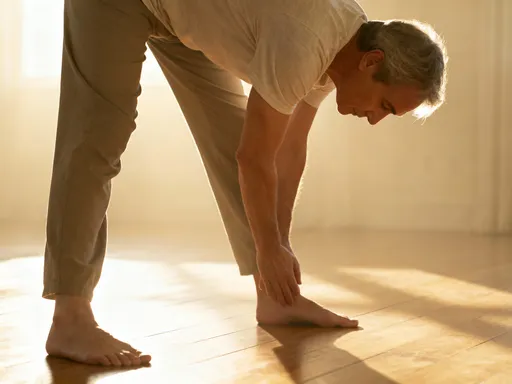
Another useful tool is tracking emotional shifts over time. Keep a brief journal noting mood before and after each session. Over weeks, patterns may emerge: perhaps certain emotions arise consistently, or specific movements trigger strong reactions. This data isn’t for criticism—it’s for insight. One woman discovered that her grief surfaced most strongly during forward bends, a posture that gently compresses the chest. Once she recognized this, she allowed herself to pause, breathe, and let tears come when needed. Her practice transformed from mechanical repetition to heartfelt presence.
Rewiring Practice: Aligning Qi Gong with Emotional Honesty
Transforming Qi Gong from a routine into a responsive, healing practice begins with a shift in intention. Instead of aiming for perfection or stillness, the goal becomes presence and honesty. One powerful way to cultivate this is by starting each session with an emotional check-in. Take two minutes to sit quietly and ask: What am I carrying today? This simple act signals to the nervous system that this time is not for performance, but for listening. It creates space for whatever arises—grief, fatigue, joy, anxiety—without demanding it change.
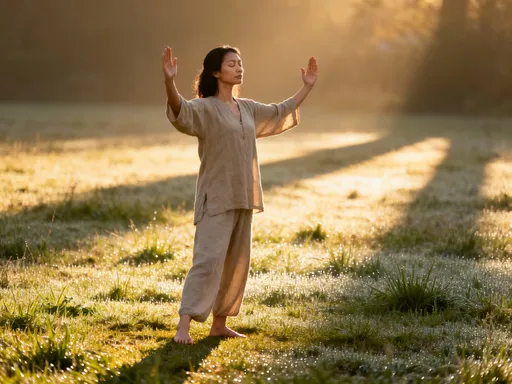
From this foundation, movements can be adapted to match inner states. If the body feels heavy, a slow, grounding sequence like “Lifting the Sky” can be done with extra pauses, allowing energy to rise gradually. If the mind is restless, a more dynamic form like “Shaking the Tree” may help release nervous tension before settling into stillness. The key is responsiveness, not rigidity. Just as a gardener waters plants according to their needs, a wise practitioner adjusts Qi Gong to meet their emotional landscape.
Embracing imperfection is another essential shift. A session doesn’t have to last 30 minutes to be valuable. Even two minutes of conscious breathing while seated at a desk can restore balance. If tears come during practice, let them flow. If frustration arises, acknowledge it with kindness. These moments of emotional honesty are not disruptions—they are the heart of the work. When Qi Gong becomes a safe space for all feelings, not just the peaceful ones, its healing power deepens.
Guided imagery can also support emotional alignment. For example, visualizing energy moving through the body like a gentle stream can help release stuck emotions. Pairing this with affirmations such as “I allow myself to feel” or “I am safe to release” reinforces emotional safety. These tools are not about changing feelings, but about creating conditions where they can move naturally.
Building Sustainable Habits Without Burnout
Long-term wellness doesn’t depend on heroic efforts. Sustainable Qi Gong practice is built on small, consistent actions that honor the fluctuating nature of life. The myth that more practice equals better results leads many to burnout. Instead, a compassionate approach focuses on micro-moments of awareness. A two-minute breathing reset between tasks, a mindful walk around the block, or a simple posture check while standing in line—these are all valid forms of Qi Gong.
One effective strategy is habit stacking: linking a brief Qi Gong practice to an existing routine. For example, after brushing teeth in the morning, spend one minute standing in “Wu Ji” posture, feet grounded, breath deep. Or before checking email, pause to roll the shoulders and stretch the spine. These tiny rituals accumulate, reinforcing the nervous system’s ability to return to calm without requiring large time investments.
Flexibility is crucial. Some days, a full session may feel nourishing. Other days, even five minutes may feel like too much. That’s okay. The goal is not daily perfection, but consistent return. Missing a day doesn’t mean failure—it means being human. What matters is the willingness to begin again, without self-judgment.
Supportive environments also enhance sustainability. Practicing near a window with natural light, using soft music or nature sounds, or joining a gentle online group can foster motivation. But the deepest support comes from an internal shift: viewing Qi Gong not as a duty, but as a gift to oneself. When framed as an act of self-care rather than self-correction, the practice becomes inherently rewarding.
From Survival to Thriving: The Real Goal of Qi Gong
The ultimate aim of Qi Gong is not to eliminate emotion, but to live with greater resilience, awareness, and connection. Many begin the practice seeking relief—from anxiety, fatigue, or emotional overwhelm. These are valid starting points. But true transformation occurs when the goal shifts from survival to thriving. This means moving beyond the desire to “feel better” and toward the capacity to feel fully—joy, sorrow, strength, and vulnerability—without collapsing or resisting.
When emotional traps are avoided, Qi Gong becomes more than a technique—it becomes a way of being. Practitioners report not just reduced stress, but increased presence in daily life. They listen more deeply, respond more thoughtfully, and move through challenges with greater ease. This is the essence of balanced Qi: not the absence of difficulty, but the presence of inner stability.
True energy balance feels alive, not numb. It’s the warmth in the chest when hugging a child, the deep breath after a good cry, the quiet smile during a sunset. It’s the ability to hold complexity without breaking. By aligning Qi Gong with emotional honesty, practitioners unlock its deepest promise: a life of clarity, compassion, and enduring peace. This is not a destination, but a continuous return—to the breath, to the body, to the truth of the present moment.